
Table Of Content
Introduction Understanding Augmented Reality (AR) and Virtual Reality (VR) in eCommerce Real-Life Use Cases of AR and VR in eCommerce Benefits of AR and VR for Shoppers and Retailers How to Implement AR and VR in an eCommerce Store Challenges and Costs of AR/VR in eCommerce Brands Successfully Using AR and VR in eCommerce The Future of AR/VR in eCommerce Conclusion FAQs
Introduction
Ready to turbocharge your digital sales and customer engagement with cutting-edge AI and immersive tech? Discover how businesses from startups to global giants are transforming eCommerce with AR and VR and how you can too.
Digital retail is progressing faster now than at any time in history. With consumers demanding immersive and personalized online shopping experiences, retailers are turning to innovative technologies like Augmented Reality (AR) and Virtual Reality (VR) to bridge the gap between digital convenience and real-world interaction.
In this extensive guide, we’ll explore how AR and VR are reshaping eCommerce, the benefits for both shoppers and retailers, tools for implementation, real-world examples and what the future holds.
Understanding Augmented Reality (AR) and Virtual Reality (VR) in eCommerce
Before diving into how these technologies are transforming eCommerce, it’s essential to understand what AR and VR actually are and how they differ.
Augmented Reality (AR)
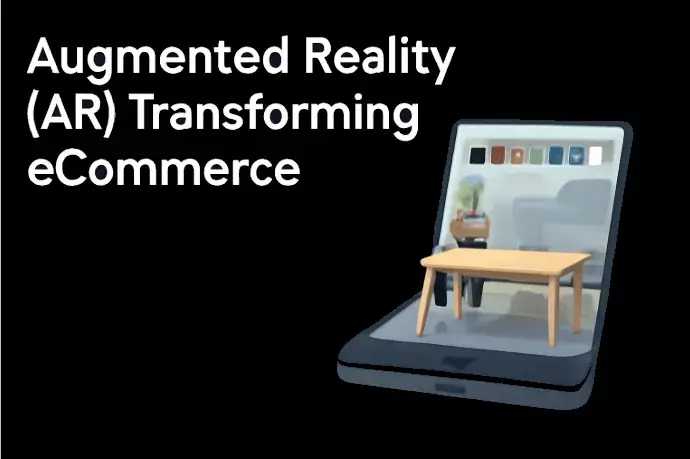
AR puts virtual things right into what you see around you, live and in real time. Imagine pointing your smartphone camera at your living room and seeing a virtual couch appear, sized perfectly to fit your space. AR enhances your physical environment with computer-generated elements like 3D models, images or animations, creating a blended experience between real and virtual.
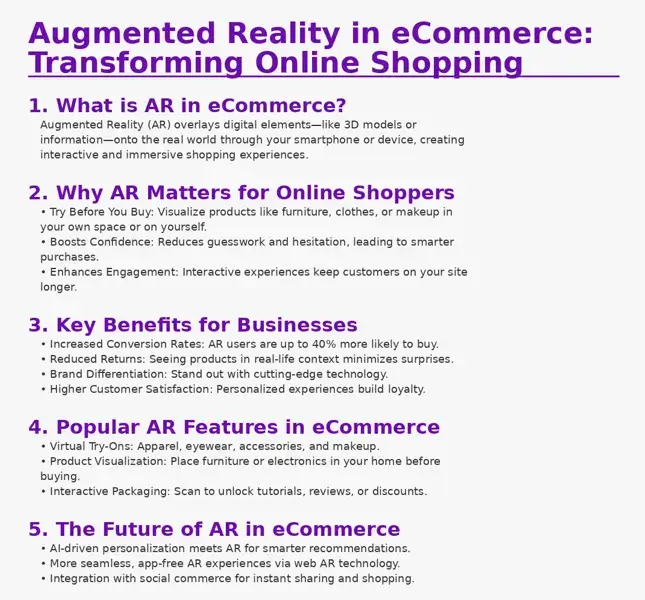
In eCommerce, AR allows shoppers to visualize products in their real environment or virtually “try on” products such as clothing, glasses or makeup all from the comfort of their home.
Virtual Reality (VR)
Virtual Reality takes you inside a completely digital world you can explore. Using VR headsets, shoppers can explore a virtual store, walk through a digital showroom, or test products in a computer-generated space detached entirely from the physical world.
AR vs. VR: What’s the Difference in eCommerce?
Augmented Reality (AR)
- Experience: Enhances the real world with digital overlays
- Hardware needed: Smartphones, tablets, AR glasses
- Use cases in eCommerce: Virtual try-ons, 3D product visualization
- Accessibility: High (most smartphones support AR)
Virtual Reality (VR)
- Experience: Fully immersive virtual environment
- Hardware needed: VR headsets (Oculus, HTC Vive)
- Use cases in eCommerce: Virtual stores, showroom walkthroughs
- Accessibility: Lower (needs special headset)
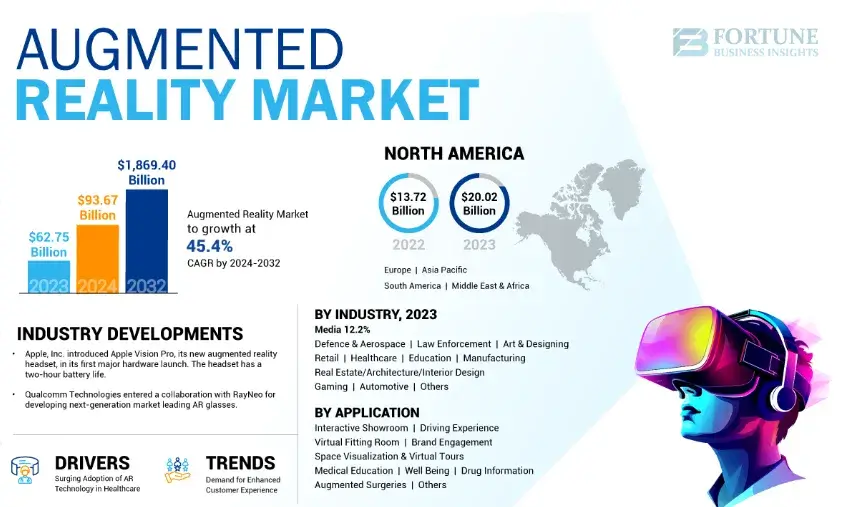
Source - fortunebusinessinsights
Real-Life Use Cases of AR and VR in eCommerce
Many retailers are already leveraging AR and VR to create engaging online shopping experiences that increase customer satisfaction and sales.
Also read how Augmented Reality is unlocking new opportunities and reshaping retail, check out our detailed blog on taking shopping experiences to the next level here.
Virtual Try-Ons for Fashion and Accessories
Shopping for clothes or glasses online can be risky without physically trying products on. AR solves this by enabling virtual try-ons. Brands like Nike, and Warby Parker offer apps where users can see how a jacket or pair of glasses looks on their body in real-time through their phone camera.
Makeup brands like Sephora use AR to allow customers to apply virtual lipstick or eye shadow shades to their face, helping them make confident purchases without visiting a store.
To know How AI and VR transforming the fashion industry in the USA Read this blog - Fashion Meets Tech: 7 Ways AI is Revolutionizing eCommerce
Furniture Shopping with AR Room Planners
One of the most popular uses of AR in eCommerce is furniture visualization. IKEA Place is a standout example, letting customers place 3D models of furniture in their own rooms through AR. This feature helps users understand how a piece fits spatially and aesthetically before committing to purchase, reducing return rates and boosting satisfaction.
Virtual Store Walkthroughs with VR
Virtual Reality takes shopping immersion further by allowing customers to step inside virtual stores or showrooms. This technology is popular in luxury retail and automotive industries, where customers can explore products in detail, customize options, and even attend virtual events.
Benefits of AR and VR for Shoppers and Retailers
The integration of AR and VR in eCommerce delivers tangible benefits, making these technologies more than just a novelty.
Reduced Returns and Better Purchase Decisions
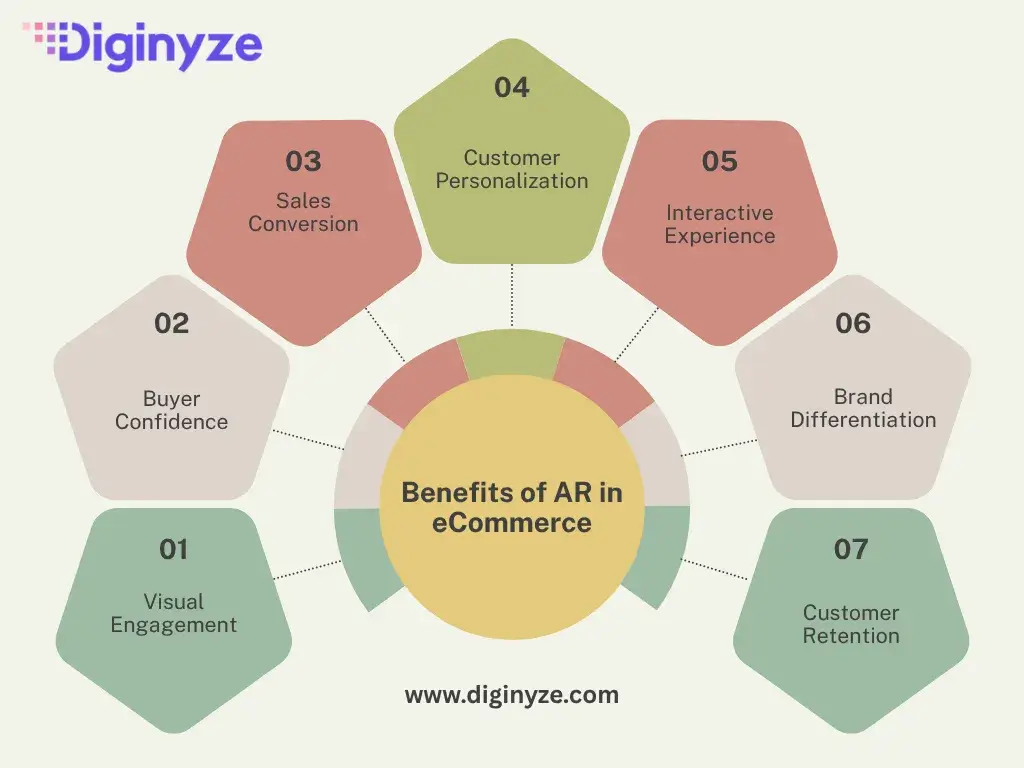
According to several studies, returns are a major cost for online retailers, often due to mismatched expectations or product fit. AR helps solve this problem by giving customers a clear visualization of how products will look or fit, reducing guesswork and return rates.
Higher Engagement and Conversion Rates
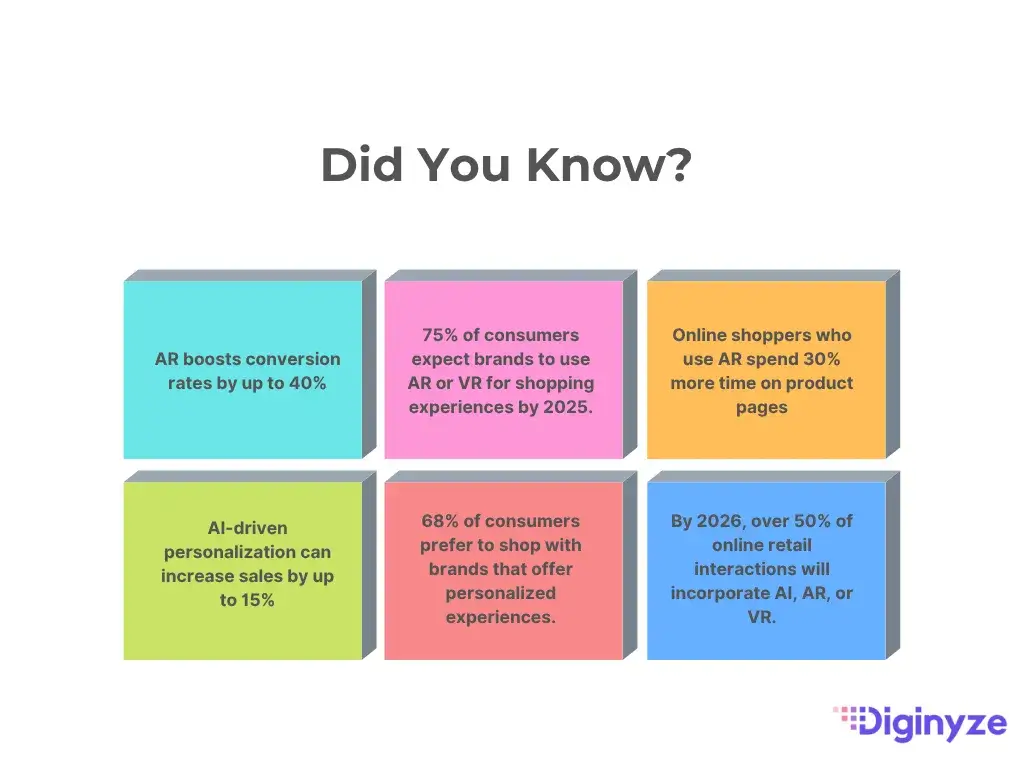
Interactive AR experiences increase time spent on product pages and engagement, leading to higher chances of purchase. Many brands report conversion rate increases of 20-40% after implementing AR features.
Personalized Shopping Experiences
AR and VR enable customization and personalization in ways static images cannot. Shoppers can virtually try different colors, sizes, or styles and even receive AI-driven recommendations based on their interactions.
Competitive Advantage
Early adoption of AR and VR offers retailers a competitive edge, appealing to tech-savvy consumers and positioning brands as innovators.
How to Implement AR and VR in an eCommerce Store
Implementing AR or VR may seem daunting, but modern tools and eCommerce platforms like Diginyze have made it increasingly accessible.
Creating 3D Models and Content
High-quality 3D models are essential for AR. Retailers can:
- Hire 3D artists or agencies.
- Use photogrammetry apps to scan real products.
- Leverage platform-provided model libraries.
VR Integration
For VR, stores can:
- Build virtual showrooms using platforms like Unity or Unreal Engine.
- Use 360° product videos or VR tours embedded on websites.
- Partner with VR experience creators.
Key Considerations
- Device compatibility (ensure experiences work on popular smartphones).
- Website speed optimization to avoid slow load times.
- Testing for usability and customer feedback.
Challenges and Costs of AR/VR in eCommerce
Despite its promise, AR and VR come with challenges.
Technical Barriers
Creating smooth AR experiences requires technical expertise and testing across multiple devices and environments.
Customer Device Compatibility
Not all customers have devices that support AR or VR. This requires fallback options and clear communication.
User Adoption
Some consumers may be hesitant to use AR/VR due to unfamiliarity or privacy concerns.
Bonus Tip:
Diginyze for Implementing AR and VR?
Diginyze is an AI-powered eCommerce platform with built in AR and VR feature.
- Comprehensive AR/VR Solutions: We offer end-to-end services from 3D model creation to full virtual showroom development.
- AI-Powered and Scalable: Our eCom platform uses AI to optimize experiences and easily scale with your business growth.
- Device Compatibility: Ensures seamless performance across popular smartphones, tablets, and VR headsets.
- Performance Optimization: Focus on website speed and smooth user experience to keep customers engaged.
- Expert Support: Dedicated team guiding you through implementation, testing, and user feedback integration.
- Suitable for All Sizes Business Models Whether you’re a startup or a global enterprise, our solutions are tailored to fit your needs.
Brands Successfully Using AR and VR in eCommerce
IKEA
Using IKEA Place, shoppers can see how furniture fits and looks in their own space through AR, helping them make confident choices and lowering the chance of returns.
L’Oréal
The beauty giant’s ModiFace app lets users virtually try on makeup, leading to increased online sales.
Amazon
Amazon’s AR View helps shoppers see products in their space before buying, making it easier to choose the right item.
Gucci
Gucci’s AR shoe try-on via mobile apps and social media filters has been a hit with younger consumers.
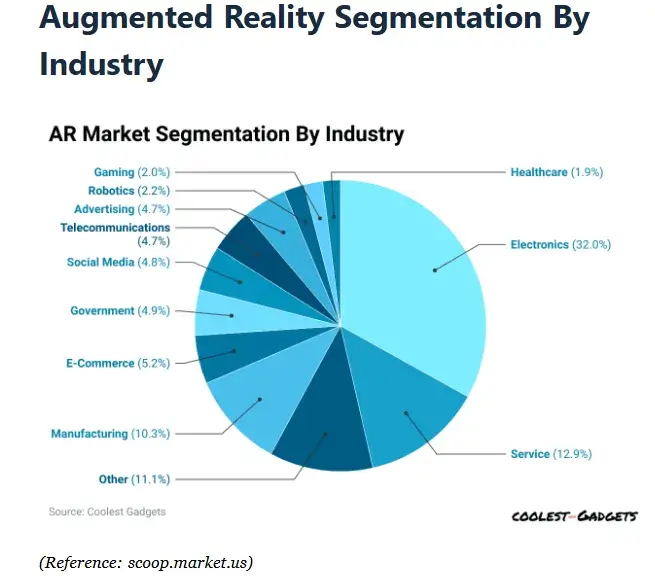
Source - scoop.market.us and coolest-gadgets
Also read - Why eCommerce Brands Need Augmented Reality: Facts You Can’t Ignore.
The Future of AR/VR in eCommerce
Looking ahead, AR and VR are poised to redefine online retail in profound ways.
AR Glasses and Wearables
The rise of AR glasses (like Apple’s rumored headset or Microsoft’s HoloLens) will bring hands-free, seamless AR shopping into everyday life.
Hyper-Personalized Virtual Stores
AI combined with AR/VR will create dynamic stores that adapt in real-time to shopper preferences, offering personalized product displays and recommendations.
Metaverse Shopping
The concept of shopping in virtual worlds or metaverses is gaining traction, where users can interact with brands and products in immersive digital spaces.
Conclusion
Augmented Reality and Virtual Reality aren’t just tech buzzwords they’re powerful tools reshaping eCommerce. By creating immersive, personalized shopping experiences, these technologies help reduce returns, boost sales, and set your brand apart in a crowded market. If you want to stay ahead and truly engage your customers, embracing AR and VR is essential.
Ready to elevate your online store with cutting-edge AI-powered AR/VR solutions? Start your transformation today with Diginyze, the all-in-one AI-powered eCommerce platform designed to unlock the future of digital retail in the USA.
Feel free to reach out for a consultation or demo. The future of shopping is immersive don’t get left behind.
FAQs
1: How is augmented reality used in online shopping?
Augmented reality (AR) in online shopping allows customers to visualize products in their real environment through smartphone cameras or AR-enabled devices. It enables virtual try-ons for apparel, glasses, and makeup, or lets users see how furniture and decor fit in their space, enhancing the buying experience and reducing returns.
2: Can I try on clothes virtually before buying online?
Yes, many retailers now offer virtual try-on features using AR technology. By using your smartphone or webcam, you can see how clothes fit and look on your body without physically trying them on, making online fashion shopping more interactive and reliable.
3. Can startups use AR/VR to build a strong online presence quickly?
Absolutely. Diginyze empowers startups with ready-to-use AR/VR tools embedded in a flexible eCommerce platform. By enabling immersive shopping experiences like virtual try-ons and interactive showrooms, startups can differentiate themselves, attract tech-savvy customers, and accelerate growth without the complexity of building these technologies from scratch.
4: Does AR really improve online shopping experience?
Yes, AR significantly enhances the online shopping experience by providing interactive and personalized product visualizations. This engagement often leads to increased customer satisfaction, reduced return rates, and higher conversion rates for retailers.
5. How can AR improve customer shopping experience and reduce returns?
AR lets customers virtually try on products or see how items fit in their space, reducing guesswork. With Diginyze’s built-in AR features, businesses can offer interactive product visualizations that boost buyer confidence and lower return rates.
6: How can eCommerce businesses implement AR?
eCommerce businesses can implement AR by integrating platforms like Diginyze, an AI-powered eCommerce solution that offers easy-to-use AR features for product visualization and virtual try-ons, helping boost engagement and sales.
7: Do AR features increase conversions in online stores?
Yes, numerous studies and case reports show AR features can boost conversion rates by up to 20-40% by providing shoppers with better product understanding and confidence, thereby encouraging purchases.
8: Is AR better than VR for online retail?
AR tends to be more accessible and widely used in online retail because it enhances the real world without requiring special equipment. VR offers deeper immersion but requires headsets and is less practical for everyday shopping. Each technology offers distinct benefits tailored to different applications.
9: How will AR and VR change the future of eCommerce?
AR and VR will enable hyper-personalized, immersive shopping experiences, allowing consumers to explore virtual stores, customize products in 3D, and interact with brands in entirely new ways, potentially integrating with metaverse platforms.
10: Which brands are using AR for online shopping?
Leading brands like IKEA, Sephora, Amazon, Gucci, and many are actively using AR to improve online shopping experiences, setting the standard for interactive retail.
11: What is the difference between AR and VR in eCommerce?
AR enhances your actual surroundings by overlaying digital images, whereas VR immerses you in a fully digital environment. AR is more accessible and commonly used for product visualization, whereas VR offers complete immersion, often for virtual stores or showrooms.
Recent Blogs
The latest insight into technology and Ecommerce
AI Chatbot for eCommerce: The 24/7 Strategy to Drive 70%+ Conversions and Scale
Did you know? 71% of Gen Z customers buy items via chatbots and 40% of customers use retail digital assistants.
KNOW MORE
AI for Small Retailers: How to Thrive in the E-Retail Revolution
Did you know that U.S. eCommerce sales are expected to hit a record $1.192 trillion in this year, up from $571 billion in 2019?
KNOW MORE
AI-Powered vs. Traditional eCommerce Website Builder: Don’t Get Left Behind!
Choosing the right eCommerce Website Builder is crucial for any eCommerce business.
KNOW MORE
Why Top U.S. Enterprises Are Ditching Legacy eCommerce for AI-First Platforms Like Diginyze
Did you know that U.S. eCommerce sales crossed $1.1 trillion in 2024, yet over 64% of enterprise brands say .....
KNOW MORE
How AI Personalization is Driving a 25% Sales Surge
Did you know? AI-powered search functionalities can increase eCommerce conversion rates by up to 43%, significantly enhancing the efficiency of online shopping platforms. In today's fast-paced eCommerce world, time is of the essence. Customers are no longer willing to sift through endless pages of products just to find what they’re looking for.
KNOW MORE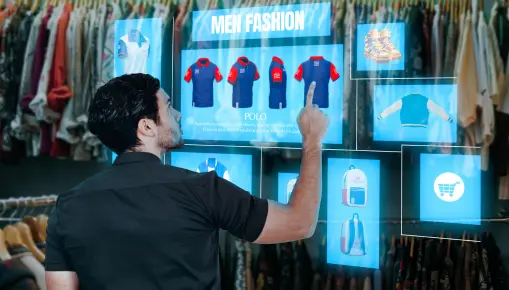
AI Overviews are Killing Your Traffic: What to do in 2026 and Beyond
Google’s AI Overviews are reshaping search visibility in 2026, causing traffic drops across eCommerce.
KNOW MORE

Advanced AI Security for your Online Store by Diginyze
Cyber Security for eCommerce
Diginyze: Discover the Future of eCommerce Analytics
Diginyze eCommerce Analytics
AI-Driven eCommerce Marketing with Diginyze
eCommerce
Diginyze's AI Search for eCommerce Store
AI in eCommerce
Diginyze's AI-Powered Intelligent eCommerce Platform
AI-Powered eCommerceDiginyze's AI-Native eCommerce for B2B, B2C & Marketplaces
AI-Native eCommerceCase Studies




Your Digital Transformation Starts Here!
Join thousands of businesses transforming with Diginyze. Sign up today and start now!