
Unified Commerce vs Omnichannel: What’s the Difference?

-
Author Diginyze
-
Published October 26, 2026
-
2 comments Join the Conversation


Most people think: Omnichannel and unified commerce are just two names for the same thing. They're not.
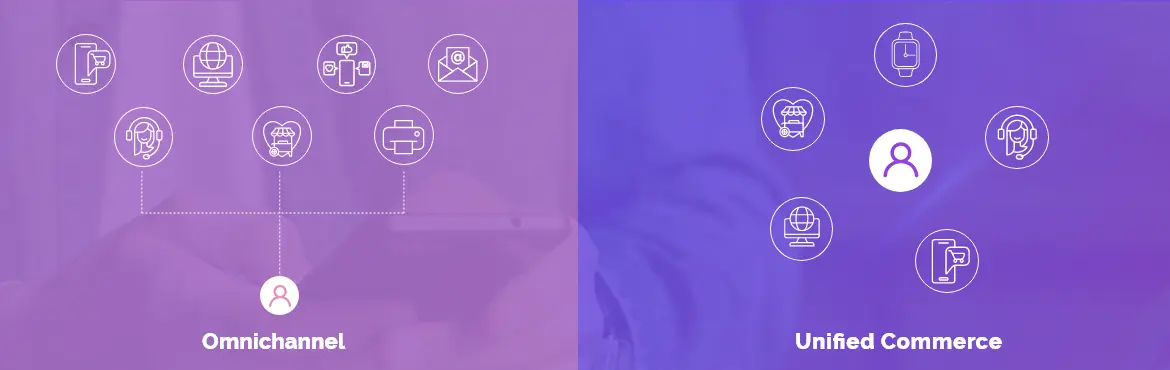
Both are about creating a connected commerce experience, but the difference is what gets connected.
The distinction often becomes clear as commerce operations grow more complex. As businesses expand across channels, keeping inventory, pricing, orders, and customer data aligned becomes increasingly challenging, often creating friction for both teams and customers. That's where the omnichannel vs unified commerce discussion matters. While the terms are often used interchangeably, they address different challenges.
Let's start by unpacking what each approach is built to solve.
What Is Omnichannel Commerce?
Omnichannel commerce connects the channels customers use to interact with a business, making it easier to move between them without starting over.
A customer might discover a product on social media, check availability online, buy on their phone, and pick it up in-store. In B2B, a buyer may research online, discuss pricing with a sales rep, place an order through a portal, and contact support about delivery. An omnichannel commerce platform connects these touchpoints to create a more consistent customer experience, though the systems behind them may remain disconnected.
What Is Unified Commerce?
Unified commerce connects the systems, data, and processes behind commerce, giving teams a consistent view across channels.
A single order may involve eCommerce, ERP, CRM, POS, inventory, and fulfillment systems. When these operate separately, teams spend time reconciling data and resolving inconsistencies. A unified commerce platform brings these systems together, helping keep pricing, inventory, customer information, and orders aligned. Rather than connecting only channels, unified commerce connects the operations behind the customer experience.
5 Key Differences Between Unified Commerce and Omnichannel
1. What Gets Connected?
Connecting sales channels does not necessarily connect the systems behind them. As businesses add channels and locations, disconnected systems can create more work for IT and operations.
Omnichannel: Connects customer touchpoints across websites, stores, marketplaces, mobile, and sales channels, helping customers move between them more easily.
Unified commerce: Connects those touchpoints with more of the underlying data and processes, helping the business operate with fewer gaps.
The difference: Connecting the channels is one part of the job. Connecting the operations behind them is another.
2. Shared Information vs. Reliable Information
A product shows as available online, but the store has already sold the last unit. Customer service sees one order status while fulfillment sees another.
Omnichannel: An omnichannel commerce platform helps channels share information, such as product availability and customer details.
Unified commerce: A unified commerce platform aims to provide a more consistent view of inventory, pricing, products, customers, and orders across the business.
The difference: Sharing information helps, but teams also need information they can rely on.
3. Connecting the Journey vs. Connecting the Transaction
An order moves from the website to a sales representative and then to the warehouse. Yet missing details, outdated pricing, or delayed inventory updates can still disrupt fulfillment.
Omnichannel: Connects customer touchpoints so buyers can move between channels without repeatedly starting over.
Unified commerce: Keeps the information supporting the transaction connected as the order moves through sales, inventory, order management, and fulfillment.
The difference: A connected customer journey does not automatically mean the entire transaction runs smoothly.
4. Integration vs. Operational Efficiency
Employees check inventory in one system, update pricing in another, and manually pass order details to fulfillment. Individually, these tasks seem small. Across thousands of orders, they add up.
Omnichannel: Integrates channels and systems to support a more connected customer experience, often alongside an effective eCommerce integration strategy.
Unified commerce: A unified commerce platform aims to connect the processes and information behind commerce, reducing the need for repeated updates and manual reconciliation.
The difference: Integration connects systems. The broader goal of unified commerce is to reduce the operational work required to keep them aligned.
5. Adding Channels vs. Scaling Operations
A new marketplace, store, or customer portal creates a sales opportunity, but it can also mean more data to manage, more processes to coordinate, and more work for IT and operations.
Omnichannel: An omnichannel commerce platform helps bring additional sales channels into the customer journey.
Unified commerce: Focuses on enabling new channels to use the information and processes already supporting the business, rather than creating unnecessary operational complexity.
The difference: Adding channels expands where you sell. Connecting the operations behind them helps make that expansion easier to manage.
What It Looks Like in Practice.
Omnichannel: Buy Online, Pick Up In-Store
A customer finds a product on a mobile app, pays online, and heads to a nearby store. Because the app is connected to store inventory, the item is reserved and ready for pickup.
The value is clear: the customer can move from digital to physical without starting over.
Unified Commerce Example:
Consider a retailer running an eCommerce website, physical stores, warehouse, ERP, and POS systems.
When a customer orders online for same-day pickup, inventory and pricing stay consistent across locations, and teams can track the order in real time using the same data, without manual reconciliation or disconnected systems. That is unified commerce in practice.
The takeaway: omnichannel connects where the customer interacts with the business. Unified commerce connects those interactions with the systems and operations behind them.
So, Which One Should You Choose?
There is no prize for choosing the newer-sounding approach. Start with the problem.
Omnichannel may be enough if:
-
Your main priority is connecting customer touchpoints across web, mobile, stores, marketplaces, and sales.
-
Your existing systems are manageable and teams have the information they need.
-
Adding a new channel does not create significant operational work.
Unified commerce becomes more relevant when:
-
Teams rely on multiple disconnected systems.
-
Inventory, orders, pricing, or customer data regularly need to be reconciled.
-
Different teams are working with different information.
-
Manual handoffs are slowing down orders or customer service.
-
Adding a new channel or location creates more work for IT and operations.
The Bottom Line
The omnichannel vs unified commerce debate is not about choosing a winner. It is about identifying the approach that best supports your customer experience, operational needs, and long-term growth. As commerce ecosystems become more complex, success increasingly depends on how effectively channels, systems, and data work together. Whether businesses are strengthening omnichannel capabilities, advancing toward unified commerce, or bringing both together, Diginyze helps organizations build connected commerce experiences aligned with their operational and growth objectives.
Book your free consultation today.
FAQs
What is the main difference between Unified Commerce and Omnichannel?
In unified commerce vs omnichannel, the main difference is the layer being connected. Omnichannel focuses on connecting customer touchpoints across channels, while unified commerce connects those touchpoints with the systems, data, and processes supporting them.
Is Unified Commerce better than Omnichannel?
Not necessarily. An omnichannel commerce platform may be enough when the priority is connecting customer touchpoints. A unified commerce approach becomes more relevant when disconnected systems, inconsistent information, and manual work are affecting operations.
Why does Unified Commerce become more important as a business grows?
As businesses expand across stores, marketplaces, warehouses, and sales channels, keeping information consistent becomes increasingly difficult. A unified commerce platform helps bring orders, inventory, pricing, and customer data together, reducing manual effort and improving operational alignment across the business.
Can a business have both Omnichannel and Unified Commerce?
Yes. In fact, the discussion around unified commerce vs omnichannel is not about choosing one over the other. An omnichannel commerce platform helps create a more consistent customer experience across channels, while a unified commerce platform connects the systems, data, and processes behind those interactions. Together, they help businesses deliver seamless experiences while maintaining operational efficiency.
Related Blogs

5 Ways to Secure Your E-Commerce Against Cyber Threats


Generative AI: A Game-Changer for eCommerce Industry


Recent Blogs
The latest insight into technology and Ecommerce
Unified Commerce vs Omnichannel: What’s the Difference?
The omnichannel vs unified commerce debate is not about choosing a winner. It is about identifying the approach that best supports your customer...
KNOW MORE
How ERP Integration Simplifies Multi-Store eCommerce
eCommerce connectors make this synchronization possible, linking platforms without forcing teams to manage information store by store. The result...
KNOW MORE – 1 2.webp)
Multi-Store eCommerce Migration: The Complete Enterprise Guide
If you're running more than one storefront right now, you already know the feeling. One team is fighting inventory mismatches on Store A. Another is...
KNOW MORE
What Is Augmented Reality in eCommerce? How AR Works & Why Online Stores Need It
Augmented reality removes the guesswork from online shopping, helping customers buy with confidence. The result? Higher conversions, fewer returns,...
KNOW MORE
How B2B eCommerce Is Transforming Aerospace Procurement
B2B eCommerce platform helps aerospace businesses streamline procurement, automate RFQs, improve inventory visibility, and provide buyers with a...
KNOW MORE

Advanced AI Security for your Online Store by Diginyze
Cyber Security for eCommerce
Diginyze: Discover the Future of eCommerce Analytics
Diginyze eCommerce Analytics
AI-Driven eCommerce Marketing with Diginyze
eCommerce
Diginyze's AI Search for eCommerce Store
AI in eCommerce
Diginyze's AI-Powered Intelligent eCommerce Platform
AI-Powered eCommerceDiginyze's AI-Native eCommerce for B2B, B2C & Marketplaces
AI-Native eCommerceCase Studies




Your Digital Transformation Starts Here!
Join thousands of businesses transforming with Diginyze. Sign up today and start now!