
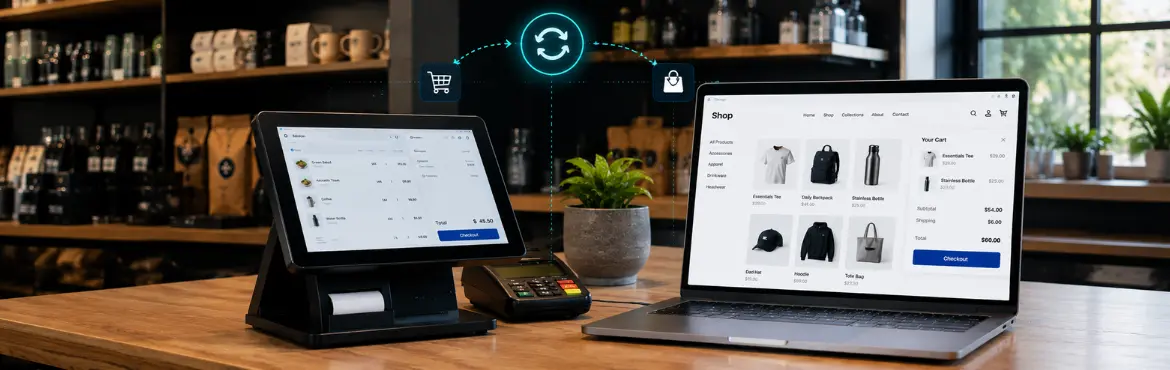
How to Integrate POS with Your Online Store

-
Author Diginyze
-
Published May 29, 2026
-
2 comments Join the Conversation


A customer browses your website, finds the perfect item in stock, and drives to your store to pick it up right away.
They walk up to the counter, excited only to hear: “Sorry, we’re out of stock.”
They refresh your website on their phone… and it still shows “In Stock.”
Frustrated, they leave empty-handed and order it on Amazon two minutes later.
This isn’t a rare nightmare. It’s happening every single day to retailers across the US, quietly draining thousands in lost sales every month.
The culprit? Your POS system and your online store are not speaking to each other.
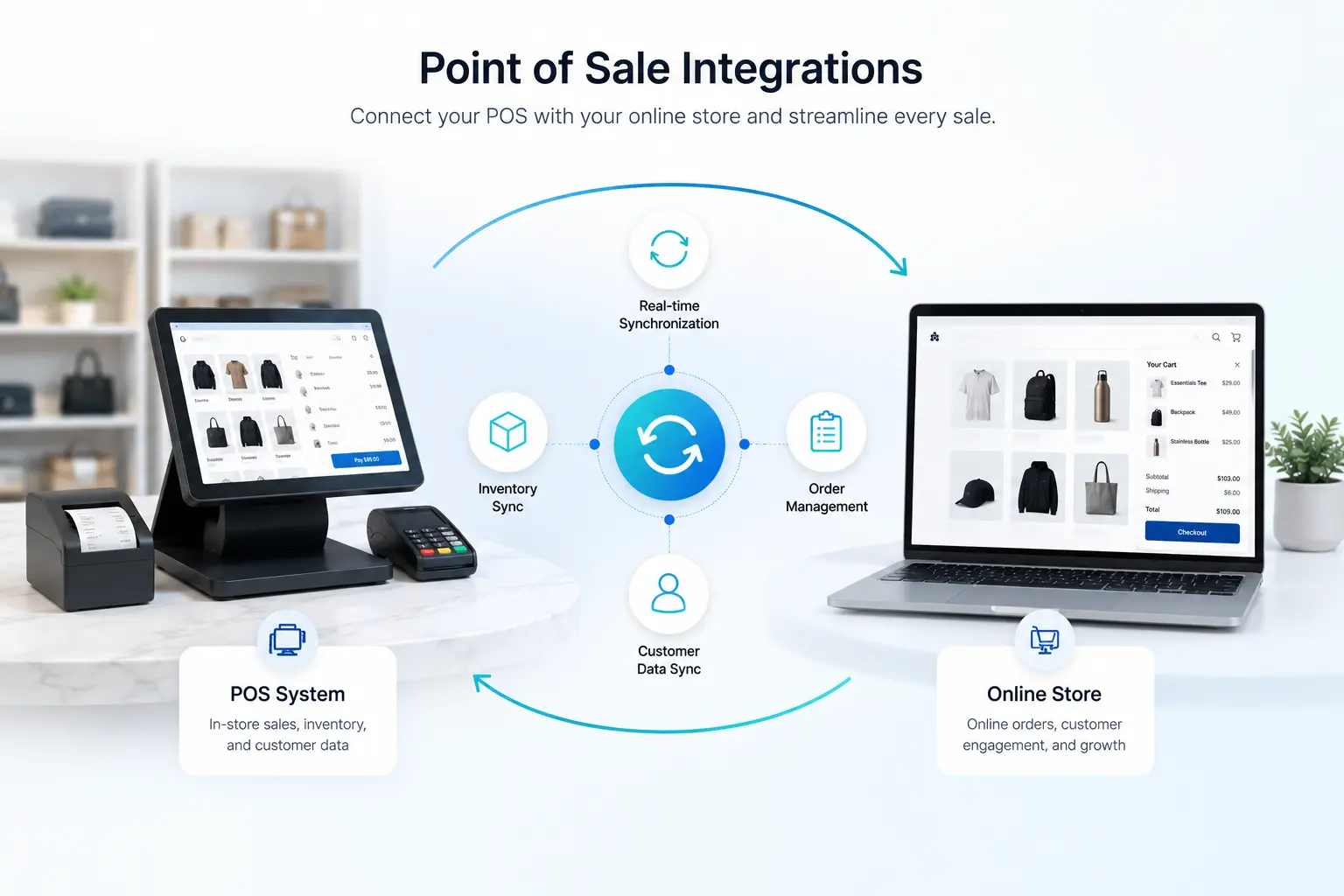
The solution? A smart, seamless POS eCommerce integration that finally makes your in-store and online operations work as one powerful system without disrupting your daily operations.
Why POS eCommerce Integration Is Essential for Business Growth
Today's shoppers don't think in channels. They browse on their phone, compare prices on a tablet, buy online, and pick up in-store, all in the same afternoon. They expect your business to keep up seamlessly.
Here's what the data says about U.S. retailers right now:
-
Over 78% of global retailers use POS systems integrated with digital payment and cloud based data management solutions.
-
BOPIS (Buy Online, Pick Up in Store) sales are growing rapidly and expected to reach $177.9B+ in U.S. sales by 2026.
If your POS and online store are still operating as two separate islands, you're not just dealing with inconvenience; you're actively losing customers to competitors who've already made the switch.
The Hidden Cost of Disconnected Systems
Most retailers feel the pain but never fully calculate it. Here’s what it’s actually costing you:
-
Overselling disasters - Website takes orders for products already sold in-store
-
Wasted hours - Staff stuck doing manual stock checks and spreadsheet reconciliation
-
Abandoned BOPIS orders - Customers leave without completing their purchase when they can’t trust your inventory accuracy
-
Blind marketing - No unified customer view = weak loyalty programs and generic offers
-
Holiday meltdowns - Peak season turns little issues into big-time disaster
Disconnected systems = lost sales, angry customers, and burned-out teams. Below is a step-by-step guide for POS eCommerce integration.
Your Step-by-Step POS eCommerce Integration Playbook
Here’s exactly how smart retailers are doing right now without shutting down operations or overwhelming their team.
Step 1: Audit Your Current Setup
Before you integrate anything, you need a clear map of what you're working with. Document your current POS system, eCommerce platform, inventory workflows, and customer data flows. Identify every place where data is manually entered, duplicated, or delayed. These friction points are exactly where integration drives the quickest wins.
Step 2: Choose the Right Integration Method for Your Business
There's no one-size-fits-all here. Your integration path depends on the complexity of your operations:
-
Native Integration: Fast and stable when your POS and eCommerce platform have a built-in connection. Ideal for standard setups.
-
Middleware Integration: The flexible sweet spot for most growing US retailers. Works across different systems and scales as you expand.
-
Custom API Integration: Best for high-volume or multi-location operations that need granular control over every data flow.
Most mid-sized retail businesses get the best results from a reliable middleware or API-based solution, something that can grow with them without requiring constant technical maintenance.
Step 3: Make Real-Time Inventory Sync Your #1 Priority
This is the gamechanger. When a product sells in-store, your website updates instantly. No more overselling. No more disappointed customers.
Step 4: Connect the Full Transaction Loop
Online orders flow into your POS. In-store sales update your website. Refunds and returns sync automatically in both directions.
Step 5: Create One Unified Customer Profile
See the full picture of every shopper’s online behavior + in-store purchases. This unlocks powerful personalized marketing, enabling repeat business.
Step 6: Test Ruthlessly in Staging
Simulate every scenario before going live. Catch issues before your customers or team ever see them.
Step 7: Roll Out Gradually
Start with one store or one product category. Perfect it, then scale. This phased approach prevents chaos.
Step 8: Train Your Team Like Rockstars
Show them how much easier their job becomes. A confident team makes the whole integration successful.
What Winning Looks Like After a Successful Integration
After integration, this is what changes:
-
Accurate real-time inventory across all channels
-
Faster and error-free fulfillment
-
Seamless BOPIS that drives more foot traffic and bigger baskets
-
Smart and personalized marketing that actually converts
-
Significantly reduced admin time
What to Look for in a POS eCommerce Integration Solution
Not all integration platforms are built the same. As you evaluate your options, prioritize solutions that offer:
-
Real-time, bidirectional data synchronization (not hourly batch updates)
-
Strong API capabilities for flexibility and future scalability
-
Seamless multi-location inventory management
-
Unified customer data hub that merges online and offline profiles
-
Automated reporting dashboards that give your business intelligence, not just raw data
-
Proven scalability, so it grows with you, not against you
Ready to Run a Truly Unified Retail Business?
POS eCommerce integration isn't a future initiative; it's the infrastructure that separates thriving retail businesses from struggling ones in 2026 and beyond. The retailers winning right now aren't doing anything exotic. They simply stopped tolerating disconnected systems and made the upgrade.
Diginyze, an AI-powered eCommerce platform, was built exactly for this, delivering real-time POS sync, powerful omnichannel inventory, and automation that makes unified commerce feel effortless.
Stop running two businesses in parallel. Start running unified, seamless and profitable operations, all from a single pane of glass.
Book your free demo today and see how simple (and profitable) this upgrade can be.
Frequently Asked Questions
1. What exactly is POS eCommerce integration, and how does it work?
POS eCommerce integration connects your in-store point-of-sale system with your online store for seamless omnichannel operations. It provides real-time synchronization of inventory, orders, payments, and customer data. When a product sells in one channel, stock levels update instantly across both. This can be achieved through native connectors, middleware, or custom API development.
2. What’s the best way to connect my POS system with my online store while avoiding downtime?
The safest approach is a phased rollout. Begin by testing the integration thoroughly in a staging environment, then launch with one location or category before scaling. This minimizes risk and keeps your operations running smoothly throughout the process.
3. How can integrating POS systems with eCommerce platforms benefit retailers?
POS eCommerce integration delivers real-time inventory accuracy, faster order processing, and eliminates manual data entry. It creates unified customer profiles for better personalization and enables seamless omnichannel experiences like BOPIS. Most retailers see measurable revenue growth and operational efficiency within the first year.
4. How long does POS eCommerce integration typically take to complete?
Implementation timelines vary by complexity. Simple native integrations can be completed in a few days to two weeks. Middleware solutions usually take two to four weeks, while custom API integrations for complex setups take three to six weeks. A proper pre-integration audit helps avoid delays.
5. Can small retail businesses benefit from POS eCommerce integration, or is it better suited for large enterprises?
Yes, small retailers benefit significantly. They often experience sharp reductions in inventory errors, save hours on manual work weekly, and improve customer loyalty. Modern platforms like Diginyze make integration accessible and scalable for businesses of all sizes, with fast ROI.
Related Blogs

Why Your Brand Needs a Quick Commerce Platform Now
How AI-Powered Analytics Can Skyrocket eCommerce Conversions

6 Ways to Improve Your Shopping Cart Checkout Experience
Recent Blogs
The latest insight into technology and Ecommerce
Unified Commerce vs Omnichannel: What’s the Difference?
The omnichannel vs unified commerce debate is not about choosing a winner. It is about identifying the approach that best supports your customer...
KNOW MORE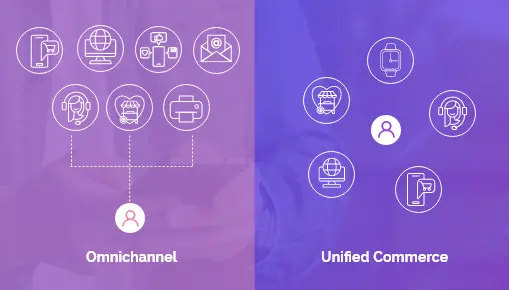
How ERP Integration Simplifies Multi-Store eCommerce
eCommerce connectors make this synchronization possible, linking platforms without forcing teams to manage information store by store. The result...
KNOW MORE – 1 2.webp)
Multi-Store eCommerce Migration: The Complete Enterprise Guide
If you're running more than one storefront right now, you already know the feeling. One team is fighting inventory mismatches on Store A. Another is...
KNOW MORE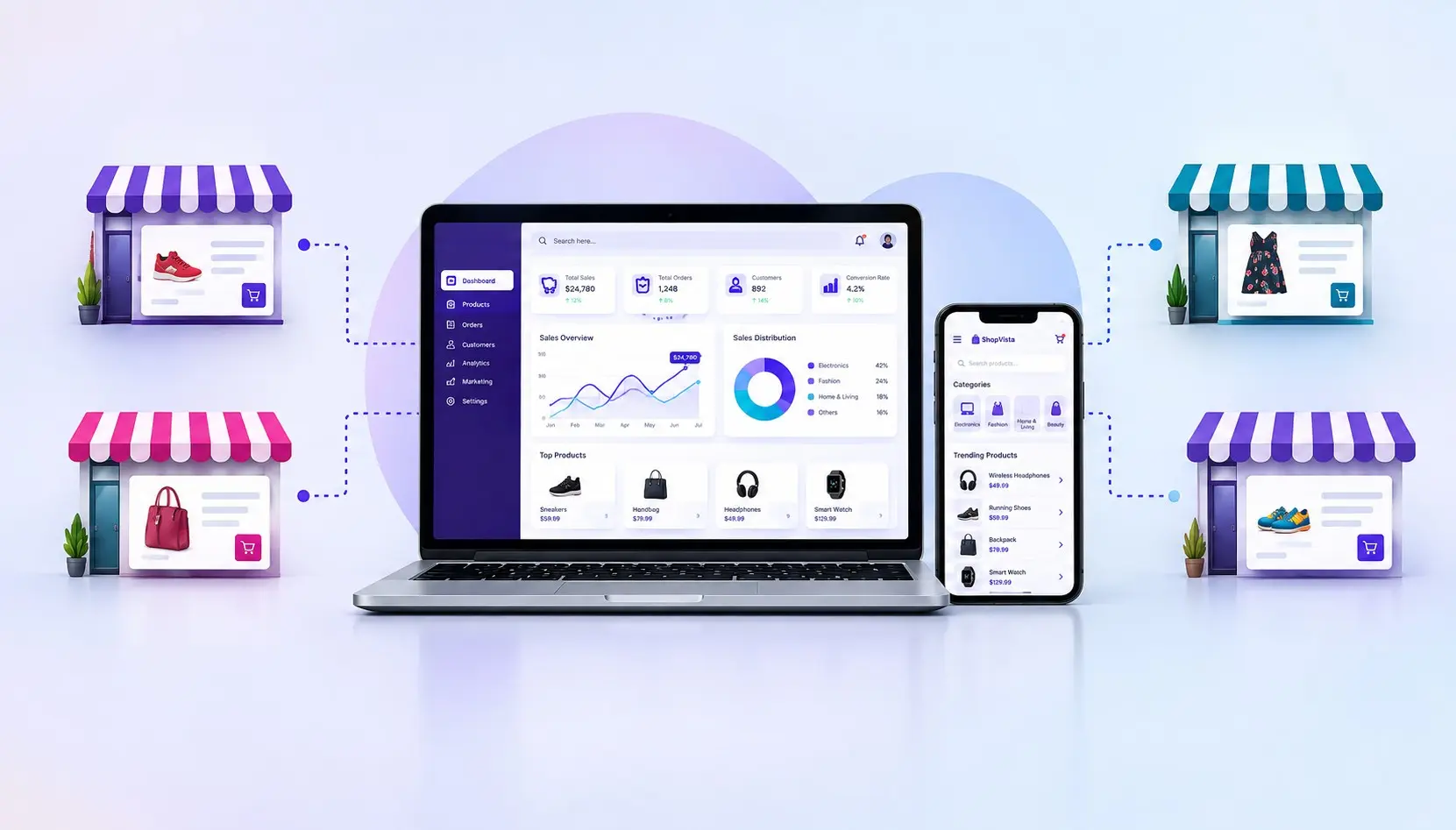
What Is Augmented Reality in eCommerce? How AR Works & Why Online Stores Need It
Augmented reality removes the guesswork from online shopping, helping customers buy with confidence. The result? Higher conversions, fewer returns,...
KNOW MORE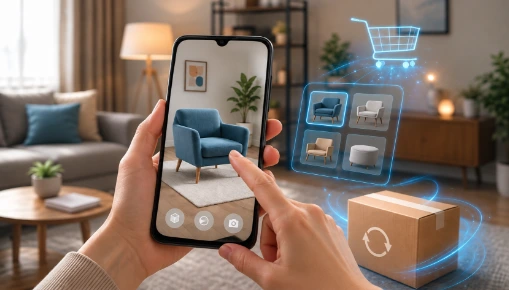
How B2B eCommerce Is Transforming Aerospace Procurement
B2B eCommerce platform helps aerospace businesses streamline procurement, automate RFQs, improve inventory visibility, and provide buyers with a...
KNOW MORE

Advanced AI Security for your Online Store by Diginyze
Cyber Security for eCommerce
Diginyze: Discover the Future of eCommerce Analytics
Diginyze eCommerce Analytics
AI-Driven eCommerce Marketing with Diginyze
eCommerce
Diginyze's AI Search for eCommerce Store
AI in eCommerce
Diginyze's AI-Powered Intelligent eCommerce Platform
AI-Powered eCommerceDiginyze's AI-Native eCommerce for B2B, B2C & Marketplaces
AI-Native eCommerceCase Studies




Your Digital Transformation Starts Here!
Join thousands of businesses transforming with Diginyze. Sign up today and start now!